
Gleason’s Glenn remembers service during peacetime
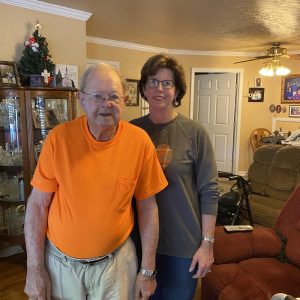
story by Press Reporter Macenna True
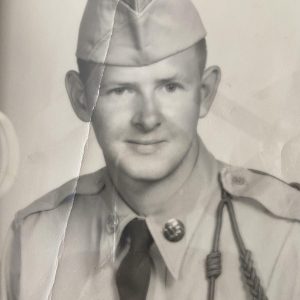
Gleason resident Jimmy Glenn was only 19 years old when he, his 18-year-old brother and two of their buddies were playing pool at a local hangout in 1956 and decided on a whim they should join the U.S. ARMY together. At the time, none of the men had a car so they stood on the corner with their thumbs in the air, in hopes of hitchhiking a ride to the draft board in Dresden.
“There was no highway 22 at the time. There were two areas back then where you could stand and hitch a ride. If you wanted to go to McKenzie you stood on the curb by the Baptist church and if you wanted to go to Dresden, you stood in front of the post office,” he remembered. “So, we went there and somebody picked us up and I reckon they were glad to get rid of us,” he laughed. “So, we all went together and told the recruiter that we wanted to sign up and he said that would be okay.”
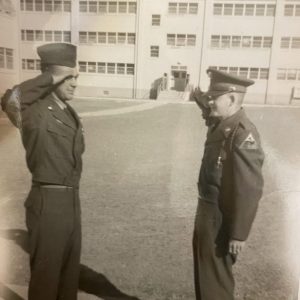
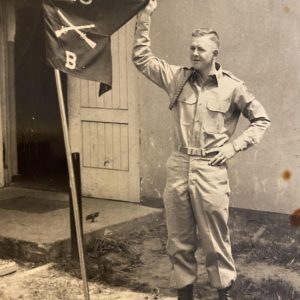
It was not too long after the split decision to join up that they all received a call to go to Memphis. Glenn completed basic training in Texas before being sent to Germany.
“I was lucky enough to have been enlisted when we were not in wartime. I was in after the war in Korea and before Vietnam,” Glenn said. He remembers when he was stateside, his pay was $78 a month and when he was overseas it was $121. “We liked to play cards when we had downtime but we couldn’t play for money because no one ever had any,” he laughed.
“One thing that happened was that our battalion was put on alert to be airlifted to Lebanon. We all rushed to get everything to go but the order came down to be canceled so we went on back to our base there in Germany.”
While in Germany, Glenn made many lifelong meaningful friendships and remembers several of them fondly today. He remembers F-85 jets that would fly over them for training combat missions and drop sacks of flour on them. They would have to close the hatches on the armored personnel carriers before the dust could get in.
While in Germany, he received a call from his cousin, Lindall King, who said he was stationed there as well. King had his car sent over from the states to Germany and was able to take Glenn and his brother out and show them the sights in the country. “I didn’t even know he was there so that was a big surprise. I also didn’t know they could ship a car overseas like that,” he said. One of the biggest memories Glenn shared was of the Autobahn in Germany. He said, “That was one of the highways I believe that Hitler built. I don’t think there is a speed limit. I reckon it is as fast as your nerves will let you go!”
He also remembers shaving in the snow using water that was boiled in a metal helmet while in the field for training drills and the German love of soccer. Glenn said, “That’s a big sport there. I remember a group of us were in what we call a beer joint and the game was on. We were getting kindly loud, and the owner came over to us and asked us to quiet down so the customers could hear the game. We did of course, and I even got to go see one. I think soccer should be called football because they really have some great footwork! It was something else to see.”
He said, “One funny thing was when I was on my way home to be discharged from Germany in 1959, Elvis Presley had been drafted and was headed to Germany to start his tour of duty. I didn’t get to see him or anything, but I reckon we were in passing at some point. I really respected him for that. He didn’t have to do that, you know, he could have gotten out of it but he didn’t and I think that was admirable. He wore the same kind of patch on his arm that I did, and he served just like me and I think that is admirable.”
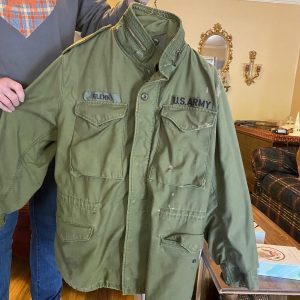
During his tour of duty, President Eisenhauer passed a law that those enlisted were required to join the National Guard for at least two years after being discharged. When he returned home in 1958, he signed with the National Guard out of Dresden. He was discharged from the Guard two years later, then reenlisted with a unit in McKenzie for six more years. During that time Martin Luther King Jr was assassinated and Glenn’s unit was put on alert to be ready to head to Memphis. However, they did not receive the order to deploy.
Glenn met his wife at a factory where they were employed soon after he returned from Germany. Two years later, they were married, bought a house, and began a family. Glenn decided to end his service to focus on his family after ten years. Glenn still resides in the house they made a home and an American flag remains proudly on display.


